

By definition, a book is a written work organized into pages, expressed in handwritten, printed, or digital form. But it’s not just that, let’s face it.
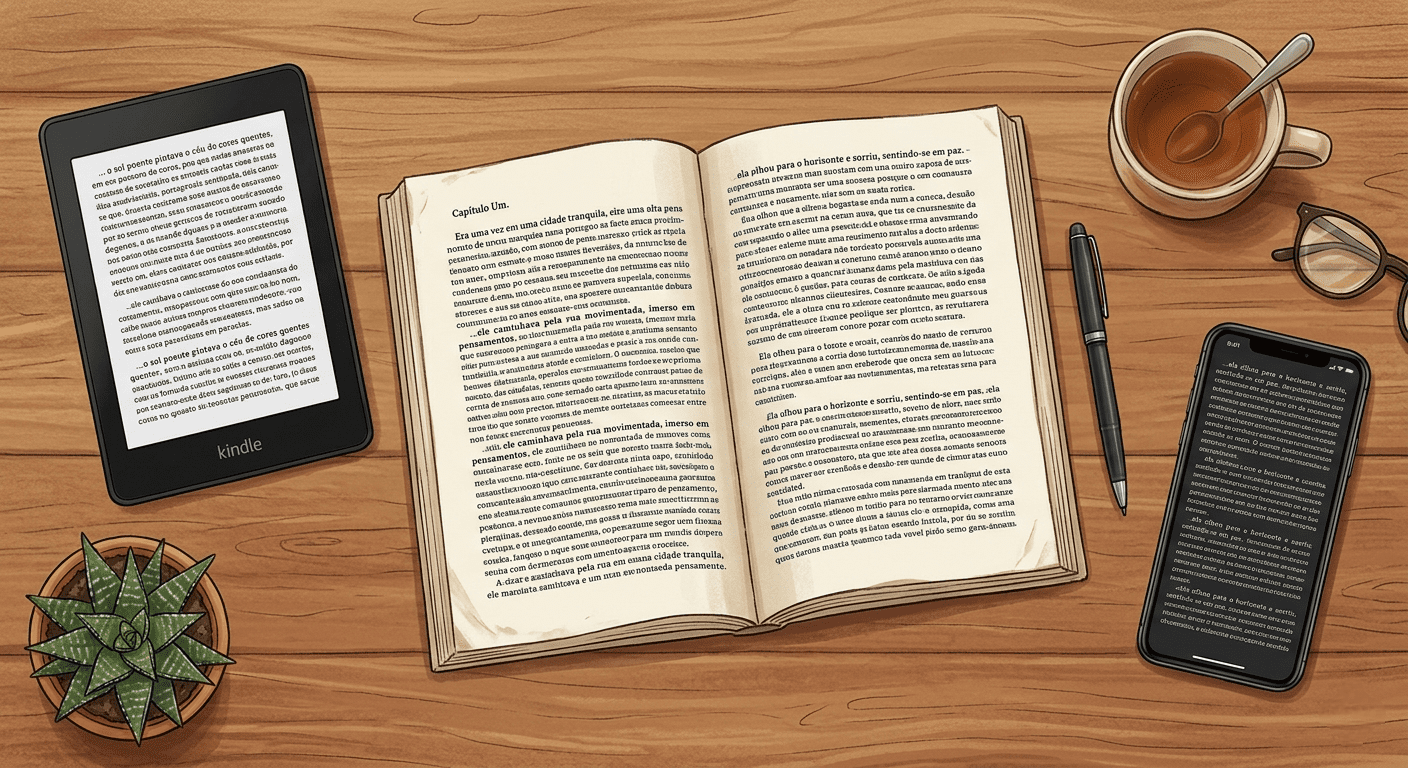
A book is, above all, a human gesture. It’s the attempt to fix thought in time, to capture in words something that naturally escapes: ideas, sensations, experiences, dreams. From the clay tablets of Mesopotamia to modern Kindles and tablets, the book has always been an extension of consciousness—a body for the spirit of words.
Philosophically, the book is a paradox: a finite object that harbors infinity. An ordered succession of pages that contains disorders, contradictions, abysses. Reading a book is, in a way, an act of humility: it’s letting oneself be guided by an absent mind, by someone who is no longer there, but who still speaks to us. It breaks the barriers of time, allowing a reader of today to dialogue with an author from a thousand years ago—or with a future version of oneself.
But a book is not just what is written. It is also what is read. Interpretation is where the book truly happens: between the text and the reader. No reading is neutral; the reader, upon approaching the book, brings with them an entire universe—expectations, affections, culture, humor, experiences. And, in this silent friction between what was written and what is understood, a third element is born: meaning. A book is not what the author intended to say, nor what the reader understood—it is this tense dance between the two.
Today, in the context of digital books and multiple forms of reading (and distraction), the book seems to have lost its sacred aura. What was once a rare, almost magical object, has become just another file in a sea of accessible content. The screen competes with the world—notifications, networks, videos—and reading becomes fragmented, often anxious. Yet, the book resists.
It resists because it is not just a format—it is a form of relationship. An invitation to silence in a time of noise. A deliberate slowness in a world that demands speed. The e-book, the audiobook, the Kindle, the tablet—these are all just mediums. What defines a book is not its material, but its intention: a book is what opens us to something beyond ourselves.
Reading, in this scenario, is an act of resistance. It is choosing to delve deeper when everything calls us to the surface. And the book, even digitized, remains what it always was: a mirror, a map, a labyrinth—and, sometimes, an exit.